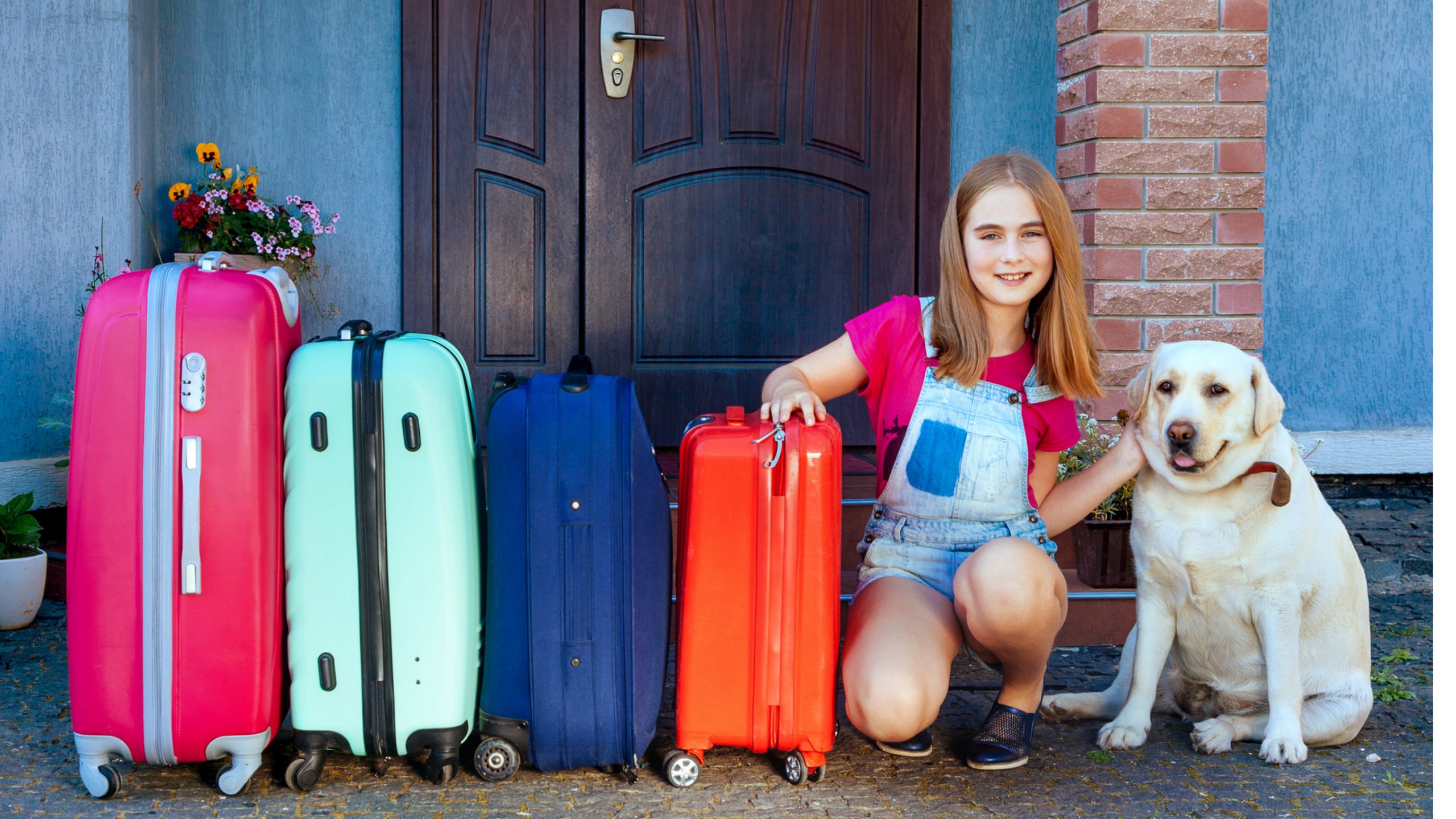
Time Management is the Order of the Day when you are a working parent with kids and dog to take on a vacation. So here is a MomsTribute.com premium blog to organize that special trip from our all-animal-topic expert blogger with the best tips and advice for a smooth and stress-free packing project.
Our family rarely goes anywhere without our dog. He’s a main part of our family. That also means we need to pack him his own bag when we depart on vacation. To ensure we have all the necessary items, we must strategize on what is needed, load up on the essentials, and approach the trip like a scout: always prepared. Some items may require ordering online ahead of time, so never wait until the last minute.
This is my list of essentials that I put together when traveling with dogs:
- Identification: Check to make sure the collar is secure and the ID tags are visible. Sometimes the phone numbers fade with wear and tear. I also highly recommend having your dog microchipped. Microchips reunite animals with their owners more times than you can imagine. Microchips are merely a number that comes up when scanned by a reader (vets and shelters have the readers). When this number is put into a database, any pertinent phone numbers and contact information you have inputted will be linked. Microchips are not GPS devices. If your animal is microchipped, please visit the website prior to your trip departure and ensure the contact information is current. If you are not sure if your animal is microchipped, visit your veterinarian. They can easily verify if a microchip is present, and if not, they will happily place a microchip for you if requested (for a fee).
- GPS Devices: I am a strong believer that no dog should be let off leash unless they have a 100% recall. Know your dog. If your dog has an excellent recall but you know of certain noises or situations that spook them, don’t leave their fate to chance. Leash them up! If you do have a well-mannered dog or a top-notch trail dog that stays close, I still recommend GPS. One product is the Whistle. This device clips to their collar and requires Wi-Fi or cellular service to locate your dog. The device is best used in urban areas, as we all know connection issues happen in rural areas. I love the Whistle device but have also been through several of them due to the item falling off (one down a gopher hole, another at a rural rest stop) and another got water-logged with swimming. The device can get wet, but not heavily soaked for extended periods of time. With this device, you have to pay for a plan. It’s a pretty small device that tracks movement over the course of a day, similar to a Fitbit. The newer devices have a longer battery life, but if you are in the backwoods, I don’t trust that it would last long enough for you to get a good signal and locate your dog, especially with spotty reception. For backwoods hiking and camping, I highly recommend the Garmin Radio Collar. It’s big, it’s clunky, but it can find your dog 10+ miles out! It uses satellites to pinpoint your location relative to your dog and is incredibly accurate. The Garmin gives me peace of mind. It’s a high price point, but worth every penny!
- Dog food: This isn’t a good time to change your dog’s food. I discourage going on a trip with the attitude of taking the least amount of food, anticipating that you will buy the local variety of dog food there. Unless you want a trip ruined with diarrhea, it’s not worth doing this to your animal. Also, make sure the food you bring is in a secure odor-sealing container. You need to have it packed in a way that doesn’t attract wild animals to consume it.
- Handy items: collapsible water dish, plenty of dog toys (if your dog likes tennis balls, bring a ton). My dog loves his Kong. I like to pack a small tub of peanut butter to coat the inside of it as well.
- Medical supplies: Remember to pack your animal’s medications. I also recommend Benadryl in case there is a mild allergic reaction: the dose is the same as your dog’s weight (a 25-pound dog would get 25 mg). Saline is great to have on hand to rinse eyes, ears, and wounds. You may want to bring some light bandaging material as well as a protective ointment, such as polysporin or aquaphor. If bandaging, ensure nothing is too tight and that it doesn’t get wet. The bandage should only be used for wound care as you drive to the veterinarian. If your dog is likely to ingest foreign materials (we know the type), then don’t bandage at all. It is not worth the risk of a foreign body ingestion. Did your vet give you an anti-inflammatory/pain medication? If this was a recent prescription, and your pet is not on any other medications to conflict with this particular medication, be sure to bring it along. Some animals get pretty sore after extensive hikes, unless they’ve been cross-training for it. Another medication to consider: anti-nausea medication for animals who get carsick. If your dog is prone to motion sickness, consult with your veterinarian about an anti-nausea medication prior to travel. Do not attempt to purchase your own at the store.
- Local Diseases: Keep your dog up to date with flea, tick and heartworm prevention. Research the areas you are traveling to and traveling through. Your dog may also benefit from certain vaccines prior to travel, such as Lyme and Leptospirosis vaccines.
- Veterinarians: Before hitting the road, research the local vet hospitals and their hours of operation. Small towns may not even have a veterinarian, and if they do, they may be opened for limited hours. Have a plan in place if there is an emergency. You may want to do this for yourself as well. It’s good to know where the local human urgent cares are located.
- Leashes and Check Cords: Keep your dog leashed up. Not everyone at campsites enjoy animals. I have been on plenty of camping trips where there are dogs at neighboring sites that do not get along with other dogs. I never understand why people would take these dogs on a trip, but just beware. Do not assume that because your dog is friendly, other people’s dogs are friendly as well. If you don’t want to walk everywhere holding on to a leash, invest in a check cord that you can attaching to a solid stationary object at your campsite. This allows your dog room to walk and move without being able to wander off.
- Booties: My dog’s paws get ripped-up on hikes. We have been through four different brands of booties for our dogs, and I have finally found the one that fits the best for him and seems to have lasted. I highly recommend Qumy brand. I have purchased other brands on the web, and they either fall off while in use due to poor fit, or they fall apart after one camping trip. Others take forever to dry out if they get wet. Some are super porous and collect sediment within the shoe itself. Many caused a pressure sore where the bootie rubbed against the dewclaw. Regardless of which product you ultimately purchase, it is essential to test the product on your dog prior to using it on a long hike. I highly recommend dog socks from Ruffwear brand to be worn under the booties. This definitely helped prevent pressure sores on long hikes for my dog. You may want to buy a couple different brands of booties and bring them all with you. There is a high probability that you will lose a shoe or two or three at some point, and it’s nice to have substitutes.
- Poop Bags: Bring lots!
- Potty Breaks: Remember to plan for bathroom breaks at least every few hours and bring a collapsible travel bowl so your pup can get enough water during your journey.
- Seat Belt Harness: This is a must! Purchase a harness and seat belt for your dog. Seat belts save lives!
- Interior Car Temperatures: Monitor the location of your dog in the car. Your seat may be the perfect temperature, but is that the case for your dog, too? Are they sitting in direct sun? It might be worth investing in a sun shade for the car window to filter the light if traveling during the hottest months if the year.
- Food Breaks: When stopping to eat, never leave your dog unattended in the car. Even with the window cracked, temperatures within a car can increase to death-inducing levels in a very short amount of time. This is true for most seasons of the year. Either choose restaurants that welcome dogs or opt for restaurants with a Drive-Thru. If you need to get out and stretch your legs, there are always Rest Stops and Parks with picnic benches. This is where that check-cord may come in handy.
- Pet-Friendly Hotels: If you are planning on staying in hotels/motels/inns while you travel, plan ahead. Research pet friendly hotels and doggy daycares that may be available in the areas you’ll be visiting.
- Paperwork: Make sure your pet is up to date with all their necessary vaccinations, has a valid Rabies tag, and carries any relevant paperwork for his or her breed when traveling across state lines.
No matter where your vacation adventure takes you, you will enjoy it most by being prepared. Take plenty of pictures along the way and enjoy each moment with your canine companion! Happy Travels!
Laura D